


Can Using Cycled Media Speed Up Your Tank Cycling?

Cycling a tank is one of the most important steps in setting up a safe environment for axolotls and other freshwater species. But what if you could speed up the process? Many keepers hear about “cycled media” and wonder whether it can help their tank mature faster. The short answer is yes — when used correctly, cycled media can significantly reduce cycling time. But it’s not a magic shortcut, and it only works under the right conditions.
This guide explains what cycled media is, how it works, and when it can (and can’t) speed up your tank cycle.
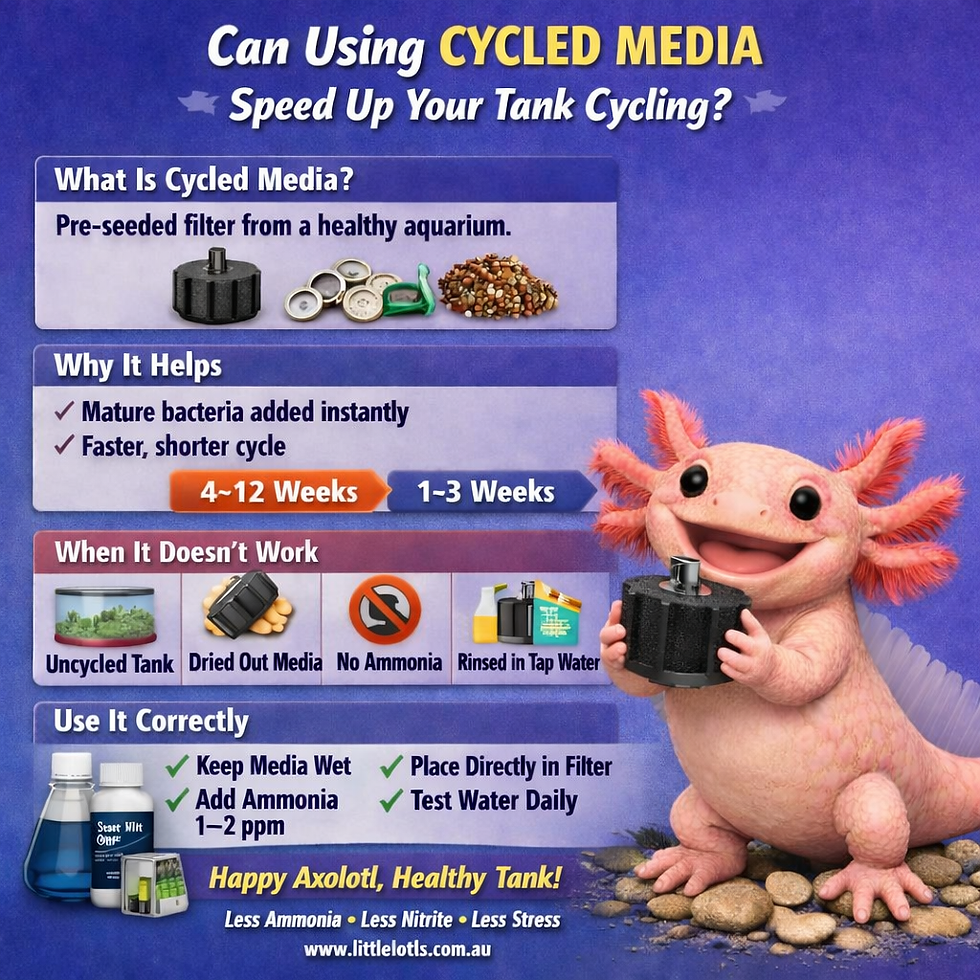
What Is Cycled Media?
Cycled media is any filter media / tank media that already contains established colonies of beneficial bacteria. These bacteria convert toxic ammonia into nitrite, and nitrite into nitrate — the core of the nitrogen cycle.
Cycled media can include:
Sponge filters
Bio balls
Pre‑seeded cartridges
Media from an already cycled tank
When this media is moved into a new aquarium, it brings mature bacteria with it.
How Cycled Media Speeds Up Cycling
A brand‑new tank starts with zero beneficial bacteria. It takes time — often 4–12 weeks — for bacteria to grow, multiply, and stabilise.
Cycled media shortens this process because:
1. You’re not starting from scratch
Instead of waiting for bacteria to appear naturally, you’re adding a ready‑made colony.
2. The bacteria begin working immediately
They start processing ammonia as soon as they’re placed into the new tank.
3. The cycle stabilises faster
A tank seeded with cycled media often reaches full cycling in days to a couple of weeks, depending on how much media is transferred.
How Much Faster Is It?
The speed depends on:
How much cycled media you add
How mature the donor tank is
How heavily stocked the new tank will be
Whether you’re adding bottled bacteria alongside it
Typical results:
Small amount of cycled media: Cycle reduced by 20–40%
Half the filter seeded: Cycle reduced to 1–3 weeks
Fully seeded filter: Tank may cycle in under a week
This is why experienced keepers often keep extra sponge filters running — they act as “backup cycles” for new tanks.
When Cycled Media Doesn’t Work
Cycled media is not a guaranteed shortcut. It won’t speed up cycling if:
1. The donor tank isn’t fully cycled
If the original tank still has ammonia or nitrite, you’re just transferring instability.
2. The media dries out
Beneficial bacteria die quickly when exposed to air. Even 10–15 minutes dry can cause major die‑off.
3. The new tank has no ammonia source
Bacteria need food. Without ammonia, the colony starves and collapses.
4. You rinse the media in tap water
Chlorine kills beneficial bacteria instantly.
How to Use Cycled Media Safely
To get the best results:
1. Move the media while wet
Keep it submerged or wrapped in tank water during transfer.
2. Add it directly to the new filter
The bacteria need oxygenated, flowing water.
3. Provide a stable ammonia source
Use pure ammonia or fish food to maintain 1–2 ppm during cycling.
Watch for the classic pattern:
Ammonia drops
Nitrite rises
Nitrite drops
Nitrate rises
5. Add bottled bacteria for extra support
Products like Stability or similar can help stabilise the colony.
Is Cycled Media Safe for Axolotls?
Yes — cycled media is one of the safest ways to prepare an axolotl tank. It reduces the risk of:
Ammonia spikes
Nitrite spikes
Stress during the first weeks
Delayed cycling
Emergency water changes
For axolotls, which are highly sensitive to water quality, a seeded filter is one of the best tools you can use.
Should You Still Complete a Full Cycle?
Absolutely.
Even with cycled media, you must confirm:
0 ppm ammonia
0 ppm nitrite
Nitrate rising
The tank can process a full ammonia dose within 24 hours
Cycled media speeds up the process, but it does not replace proper testing.
Final Thoughts
Using cycled media is one of the most effective ways to speed up tank cycling, especially for axolotl keepers who need stable, low‑toxicity water from day one. When transferred correctly, it can cut weeks off the cycling process and help your tank reach biological stability much faster.
However, it’s not a shortcut to skip testing or proper cycling steps. Think of cycled media as a head start — not a replacement for the full process.


Comments