


Essential Tips for Safely Tubbing Your Axolotl


Axolotls are fascinating aquatic creatures that require special care to thrive. One important aspect of their care is tubbing, a technique used to isolate or treat axolotls safely without causing stress or injury. If you are an axolotl owner or enthusiast, knowing the best and safest ways to tub your pet can make a big difference in their health and comfort. This guide offers practical advice and clear steps to help you tub your axolotl with confidence.
Why Tubbing Is Important for Axolotls
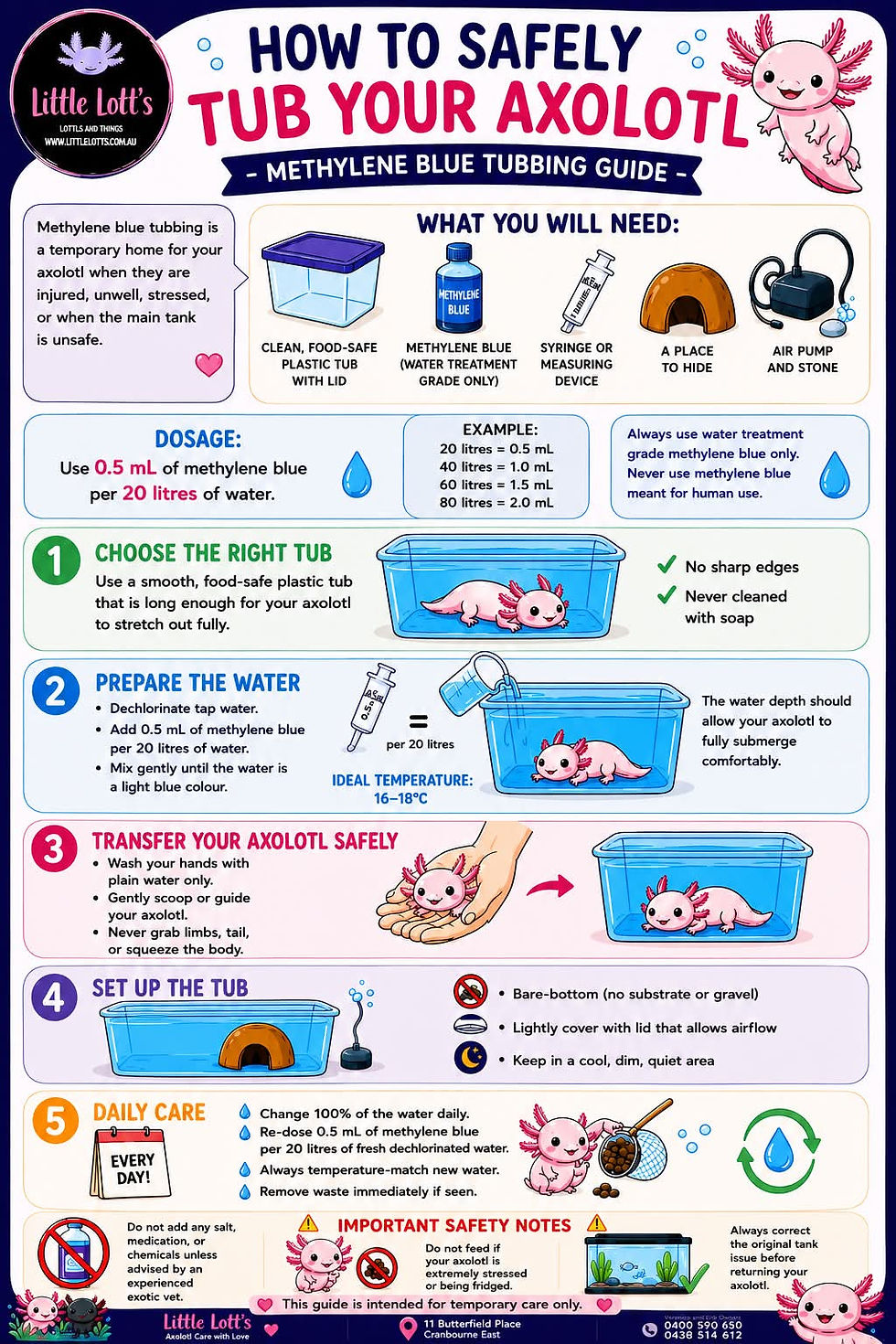
Tubbing involves placing an axolotl in a small container or tub separate from its main tank. This method is useful for several reasons:
Quarantine: To isolate a new or sick axolotl and prevent disease spread.
Medication: To administer treatments in a controlled environment.
Observation: To monitor behavior or health closely.
Cleaning: To temporarily house the axolotl while cleaning its main tank.
Using the right tubbing technique reduces stress and avoids injury, which is crucial for these sensitive amphibians.
Choosing the Right Tub for Your Axolotl
Selecting an appropriate tub is the first step to safe tubbing. Here are key factors to consider:
Size: The tub should be large enough for your axolotl to move comfortably but not so large that it becomes difficult to manage. A container around 5-8 litres usually works well. It's easier to have at least two containers so you always have one ready to go.
Material: Use a smooth, non-toxic food grade plastic or glass container. Avoid rough surfaces that could damage the axolotl’s delicate skin.
Water Depth: Fill the tub with water deep enough to cover the axolotl but shallow enough to prevent it from swimming excessively. Around 4 to 6 inches of water is ideal.
Temperature: Maintain water temperature between 15°C to 20°C (60°F and 68°F), matching the axolotl’s main tank conditions.
Preparing the Tub for Your Axolotl
Before placing your axolotl in the tub, prepare the environment carefully:
Water Quality: Use dechlorinated water with similar parameters to the main tank to ensure safety.
Aeration: Provide gentle aeration or water movement to keep oxygen levels stable.
Hiding Spots: Add a small, smooth decoration or PVC pipe to offer shelter, reducing stress.
Cleanliness: Sterilize the tub before use to prevent contamination.
How to Safely Transfer Your Axolotl to the Tub
Moving your axolotl requires a gentle approach to avoid injury:
Use a Soft Net or Container: Scoop the axolotl carefully with a soft, fine-mesh net or a small container.
Minimize Air Exposure: Keep the axolotl submerged as much as possible during transfer.
Slow Movements: Avoid sudden or jerky motions that could startle the animal.
Lower the Axolotl Gently: Place it into the tub slowly, allowing it to acclimate to the new environment.
Monitoring Your Axolotl While Tubbing
Once tubbed, keep a close eye on your axolotl’s behavior and health:
Watch for Stress Signs: Look for excessive gill movement, lethargy, or unusual swimming patterns.
Check Water Parameters Daily: Maintain stable water quality to prevent additional stress. Best practice is to change the water every 24hours to avoid toxicity.
Limit Tubbing Time: Avoid keeping your axolotl in the tub for extended periods of time unless necessary for treatment or your tank cycle has crashed.
Feed Carefully: If feeding is required, offer small amounts of food and remove leftovers promptly.

Common Mistakes to Avoid When Tubbing Axolotls
To ensure your axolotl’s safety, avoid these common errors:
Using Harsh or Rough Containers: These can cause skin abrasions.
Ignoring Water Quality: Poor water conditions can lead to infections.
Overcrowding the Tub: One axolotl per tub is best to reduce stress.
Leaving the Axolotl Unattended: Regular checks are essential to catch problems early.
Water Temperature: High temperatures can be fatal; always match the main tank’s temperature.
Tips for Successful Medication During Tubbing
If you need to medicate your axolotl, tubbing can help deliver treatment effectively:
Follow Dosage Instructions: Use the exact medication amount recommended for axolotls.
Change Water Regularly: Replace medicated water as advised to maintain effectiveness.
Observe Reactions: Watch for any adverse effects and be ready to stop treatment if necessary.
Consult a Vet: When in doubt, seek professional advice for medication and treatment plans.
Final Thoughts on Tubbing Your Axolotl
Tubbing is a valuable technique for axolotl care when done correctly. It offers a safe way to isolate, treat, and observe your pet without causing harm. By choosing the right tub, preparing the environment carefully, and handling your axolotl gently, you can ensure their well-being during tubbing sessions. Remember to monitor water quality and your axolotl’s behavior closely and keep tubbing periods short to reduce stress.


Comments