


🌱 Why Growing a Sweet Potato in Your Aquarium Is Surprisingly Amazing for Water Chemistry
- Veronica And Erik

- May 13
- 3 min read
A fun‑fact–packed blog for aquarists who love weird, wonderful, and natural filtration hacks
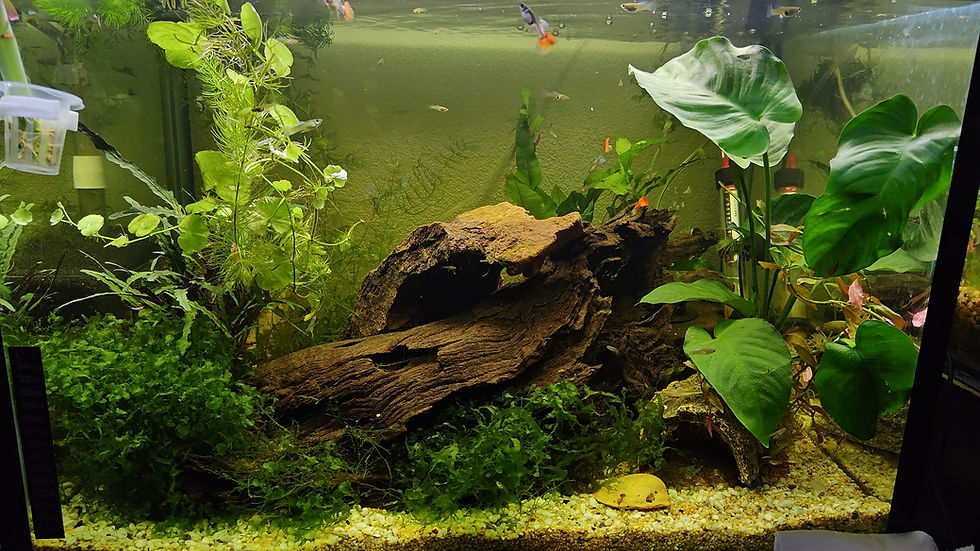
Growing a sweet potato in your aquarium isn’t just a quirky aesthetic choice — it’s a legit water‑quality superpower. This humble tuber sends out long, leafy vines above the tank and a network of roots below the surface that act like a living filtration system. And yes, it looks adorable while doing it.

Let’s dig into the science, the fun facts, and why your fish (or axolotl!) will thank you.
🍠 Fun Fact #1: Sweet Potatoes Are Nitrate‑Eating Machines
The roots of a sweet potato plant absorb nitrate, the end product of the nitrogen cycle. Nitrate isn’t immediately toxic, but high levels stress aquatic animals and fuel algae blooms.
Sweet potatoes grow fast — really fast — which means they suck up nitrates like a hungry vacuum cleaner. Many aquarists report noticeable nitrate drops within a week of adding a sprouting sweet potato.
Why it matters: Lower nitrates = fewer algae outbreaks, clearer water, and happier gills.
🌿 Fun Fact #2: The Root System Works Like a Natural Filter
As the sweet potato grows, it sends out long, white, feathery roots that create a massive surface area for beneficial bacteria.
These bacteria help process:
Ammonia → toxic
Nitrite → also toxic
Nitrate → less toxic, but still needs removal
The plant + bacteria combo becomes a biological filtration powerhouse.
Bonus: The roots provide hiding spots for shrimp, fry, and shy fish.
💨 Fun Fact #3: Sweet Potatoes Oxygenate the Water (Indirectly)
Plants don’t oxygenate water the same way they oxygenate air, but they do improve gas exchange by:
Increasing surface agitation when vines grow out of the tank
Supporting bacteria that stabilize oxygen levels
Reducing organic waste that would otherwise consume oxygen
It’s like giving your aquarium a gentle, natural “breath of fresh air.”
🌈 Fun Fact #4: They Reduce Algae by Outcompeting It
Algae thrive on excess nutrients. Sweet potatoes grow so quickly that they hog the nutrients algae wants, especially nitrates and phosphates.
The result:
Less algae on glass
Less algae on decorations
Less algae on your sanity
🧪 Fun Fact #5: They Stabilize pH by Reducing Organic Waste
A cleaner tank with fewer decaying organics means fewer pH swings. Sweet potatoes help by:
Absorbing dissolved nutrients
Reducing the load on your filter
Slowing the buildup of acidic waste
Stable pH = less stress for your aquatic buddies.
🐟 Fun Fact #6: They’re Safe for Most Aquatic Animals
Sweet potatoes are non‑toxic, and their roots are soft enough that fish won’t injure themselves. Axolotls, goldfish, guppies, and bettas all coexist beautifully with them.
Just make sure:
The potato is partially above water (they need air)
You rinse it before adding
You remove it if it starts to rot (rare but possible)
🌱 Fun Fact #7: They Turn Your Aquarium Into a Mini Jungle
The vines grow into lush, trailing greenery that looks like a living curtain. It’s gorgeous, low‑maintenance, and gives your tank a magical, overgrown vibe.

Some aquarists even train the vines around shelves or up a trellis.
🧡 Why Aquarists Love This Trick
Growing a sweet potato in your aquarium gives you:
Natural nitrate reduction
Extra biological filtration
More stable water chemistry
Less algae
A beautiful, leafy display
A fun science experiment
It’s one of the easiest, cheapest, and most effective natural filtration hacks out there.

Comments