


Mastering Axolotl Care in Australia: Axolotl Habitat Essentials
- Veronica And Erik

- Mar 9
- 4 min read
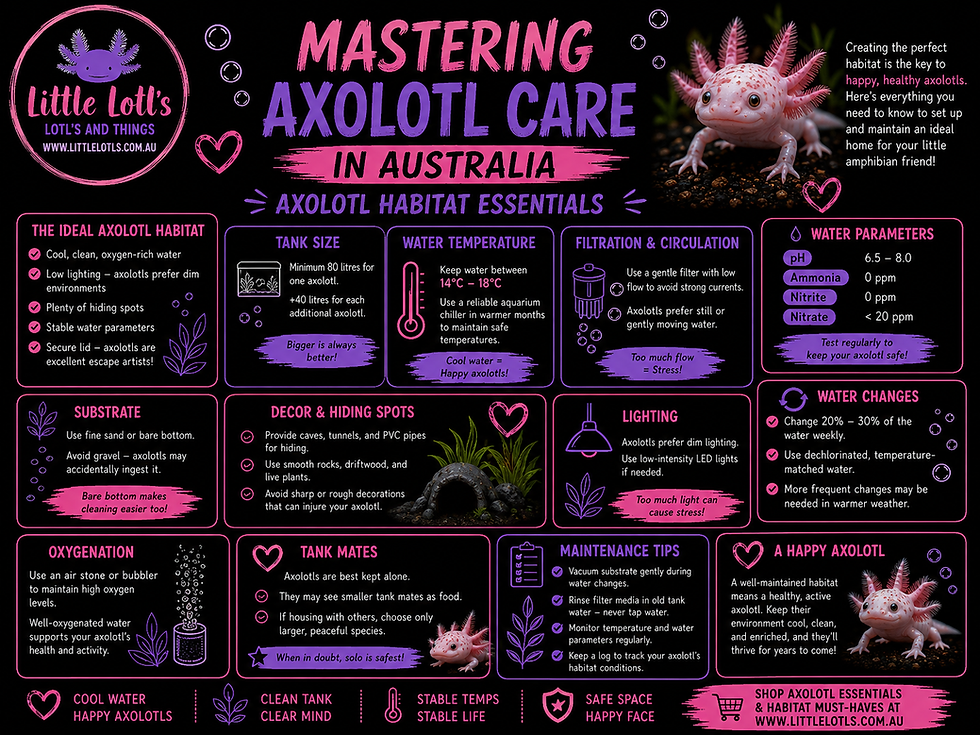
If you’re thinking about welcoming an axolotl into your home, you’re in for a fascinating journey. These unique aquatic creatures are not only adorable but also surprisingly easy to care for when you know the right steps. Living in Australia, you might wonder how to create the perfect environment for your axolotl. I’m here to share everything I’ve learned about axolotl habitat essentials and how to keep your little aquatic friend happy and healthy.
Creating the Perfect Axolotl Habitat Essentials
Setting up the right habitat is the foundation of good axolotl care. Axolotls need a stable, clean, and comfortable environment to thrive. Here’s what you need to focus on:
Tank Size: A 120-litre tank is the minimum for one axolotl. Bigger is always better because it gives them more space to swim and explore.
Water Temperature: Axolotls prefer cooler water, ideally between 14°C and 18°C. Temperatures above 20°C can stress them out.
Water Quality: Clean water is crucial. Use a good filter to keep the water clear but avoid strong currents since axolotls prefer calm water.
Substrate: Fine sand or a bare bottom tank is best. Gravel can be dangerous because axolotls might swallow it, causing blockages.
Hiding Spots: Provide caves, PVC pipes, or plants where your axolotl can hide and feel safe.
Maintaining these basics will help your axolotl live a long and happy life. Remember, consistency is key. Regular water changes and monitoring water parameters like pH and ammonia levels are essential.

Feeding Your Axolotl: What and How Often?
Feeding your axolotl the right diet is just as important as the habitat. Axolotls are carnivores and love protein-rich foods. Here’s what I recommend:
Live or Frozen Foods: Bloodworms, earthworms, and brine shrimp are excellent choices.
Pellets: Specially formulated axolotl pellets can be a convenient option.
Feeding Frequency: Young axolotls should be fed daily, while adults can be fed every 2-3 days.
Avoid overfeeding because uneaten food can pollute the water. Use tweezers or feeding tongs to offer food directly to your axolotl. This helps prevent water contamination and encourages your pet to eat.
Do Axolotls Need an Oxygen Pump?
One common question I get is whether axolotls need an oxygen pump. The short answer is: not necessarily. Axolotls breathe through their gills and skin, so they don’t require an oxygen pump like some fish do. However, good water circulation is important to keep oxygen levels stable.
Here’s what you can do:
Use a gentle filter to keep water moving without creating strong currents.
Avoid overcrowding the tank, as too many axolotls can reduce oxygen levels.
Regular water changes help maintain oxygen and water quality.
If you notice your axolotl gasping at the surface, it might be a sign of low oxygen or poor water quality. In that case, increasing aeration with an air stone or pump can help.
Maintaining Water Quality: The Key to Healthy Axolotls
Water quality is the heart of axolotl care. Poor water conditions can lead to stress and illness. Here’s how I keep my tank water in top shape:
Test Water Regularly: Use test kits to check pH (ideal 7.6-8.2), ammonia, nitrites (0), and nitrates (Below 20ppm).
Perform Weekly Water Changes: Change 20-30% of the water weekly to remove waste and toxins.
Use Dechlorinated Water: Tap water often contains chlorine or chloramine, which is harmful to axolotls. Use a water conditioner to neutralize these chemicals.
Keep the Tank Clean: Remove uneaten food and waste daily.
By following these steps, you create a safe and healthy environment that supports your axolotl’s wellbeing.

Tips for Handling and Interacting with Your Axolotl
Axolotls are delicate creatures, so handling them requires care. Here are some tips I’ve found helpful:
Limit Handling: Only handle your axolotl when necessary, such as during tank cleaning or health checks.
Use Wet Hands or a Soft Net: Dry hands can damage their sensitive skin. Always wet your hands first or use a soft net.
Be Gentle: Avoid squeezing or dropping your axolotl.
Observe Behavior: Spend time watching your axolotl to learn its habits and spot any signs of illness early.
Building trust with your axolotl takes time. They may not be cuddly pets, but they respond well to gentle care and a stable environment.
Finding Supplies and Support in Australia
Living in Australia, it’s important to find reliable sources for axolotl supplies and advice. I recommend checking out local aquatic pet stores and online shops that specialize in exotic pets. They often have the right food, tank equipment, and water conditioners suited for Australian water conditions.
For more detailed guidance, you can explore resources like axolotl care australia which offer tailored advice and quality products to help you master axolotl care.
Keeping Your Axolotl Happy and Healthy
Mastering axolotl care is all about creating the right environment and routine. With the right tank setup, diet, and water care, your axolotl will thrive. Remember to be patient and attentive. These fascinating creatures can live for over 15 years with proper care, becoming a unique and rewarding part of your aquatic family.
If you’re ready to dive into the world of axolotls, start with the basics, keep learning, and enjoy the journey. Your little lotl will thank you with its curious personality and charming smile.
Happy axolotl keeping!


Comments