


My Tank Won't Cycle! Common Reasons Your Aquarium Is Stuck and How to Fix It


If you've been patiently waiting for your aquarium to cycle and it feels like absolutely nothing is happening, you're not alone.
One of the most common messages we receive from new axolotl keepers is:
"My tank won't cycle."
The good news is that most cycling problems can be fixed once you identify what's slowing the process down.
Understanding why your aquarium isn't cycling properly can save weeks of frustration and help create a safe, healthy environment for your axolotl.
What Does It Mean When a Tank Is Cycling?
The aquarium nitrogen cycle is the process of establishing beneficial bacteria that convert toxic waste products into safer compounds.
The cycle works in three stages:
Ammonia is produced.
Beneficial bacteria convert ammonia into nitrite.
A second group of bacteria converts nitrite into nitrate.
Once both groups of bacteria are established, your aquarium can safely process waste and maintain stable water quality.
If any part of this process stalls, your tank may appear to be "stuck."
Sign #1: Ammonia Never Drops
One of the most common problems occurs when ammonia remains high but nitrite never appears.
This usually means there is not enough beneficial bacteria present to begin processing ammonia.
Possible causes include:
Not enough beneficial bacteria added
Water temperature too low
Chlorine or chloramine killing bacteria
Insufficient oxygen levels
The cycle simply hasn't had enough time
Using a quality beneficial bacteria supplement such as Little Lotls Bacta-Boost can help introduce the bacteria needed to begin the cycle.
Sign #2: Nitrite Appears But Never Goes Away
Many aquarium owners successfully grow ammonia-processing bacteria only to find nitrite remains off the charts for weeks.
This stage often feels like the tank has stopped cycling altogether.
In reality, the second group of bacteria that converts nitrite into nitrate generally grows much more slowly.
Common reasons include:
Not enough time
Low oxygen levels
Low alkalinity (KH)
Extremely high nitrite levels slowing bacterial growth
Patience is often the solution, but maintaining stable water parameters can help speed the process.
Sign #3: No Ammonia Is Being Added
Beneficial bacteria need a food source.
Without ammonia, they cannot establish or reproduce.
If your tank contains no fish or axolotls, you must provide an ammonia source throughout the cycling process.
Many hobbyists use a dedicated ammonia source such as Little Lotls Cycle-Right to feed beneficial bacteria during a fishless cycle.
Without consistent ammonia levels, the cycle may never fully develop.
Sign #4: Chlorine Is Killing Your Beneficial Bacteria
Tap water frequently contains chlorine or chloramine.
While these chemicals make drinking water safe for humans, they can destroy beneficial bacteria colonies.
If untreated tap water is added during cycling, bacterial growth may repeatedly reset.
Always use a quality water conditioner when performing water changes or topping up evaporation.
Sign #5: Your KH Is Too Low
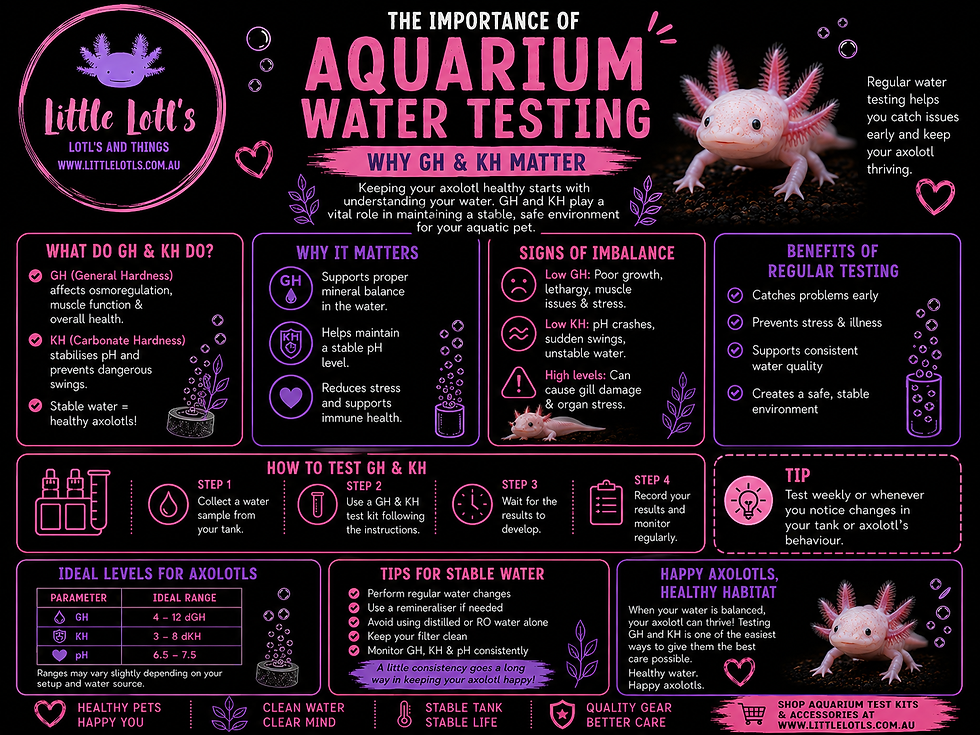
KH (carbonate hardness) acts as a buffer and provides essential carbonates used by nitrifying bacteria.
When KH becomes depleted:
pH can crash
Bacterial growth slows
Cycling may stop completely
Many aquariums in Australia have naturally soft water with limited buffering capacity.
Testing KH regularly can reveal hidden cycling issues.
Maintaining a stable pH between 7.2 and 8.2 and adequate KH levels helps beneficial bacteria thrive.
Sign #6: You're Not Testing Correctly
Cycling an aquarium without testing is like driving with your eyes closed.
To understand what stage your tank is at, you should regularly test:
Ammonia
Nitrite
Nitrate
pH
GH
KH
Without accurate test results, it becomes almost impossible to identify where the cycle is stalling.
A liquid test kit provides far more reliable results than test strips.
Sign #7: The Filter Isn't Running Properly
Beneficial bacteria primarily live on surfaces, especially inside your filter media.
If your filter is:
Turned off regularly
Cleaned with untreated tap water
Lacking biological media
the bacteria colony may struggle to establish.
The filter should run continuously throughout the cycling process.
Never rinse biological media under chlorinated tap water.
Sign #8: You're Being Too Impatient
This may not be the answer anyone wants to hear, but sometimes the tank simply needs more time.
A typical fishless cycle can take anywhere from:
6 to 12 weeks
Occasionally longer
Factors such as water temperature, KH, oxygen levels, and bacterial supplements all influence the speed of the cycle.
Many successful aquariums spend several weeks appearing unchanged before suddenly progressing.
How to Speed Up a Stalled Aquarium Cycle
If your tank seems stuck, try the following:
1. Check Your Water Parameters
Test:
Ammonia
Nitrite
Nitrate
pH
KH
GH
These results often reveal the problem immediately.
2. Add Beneficial Bacteria
A bacterial supplement can help seed the filter and establish colonies faster.
3. Ensure Ammonia Is Present
Beneficial bacteria need a constant food source.
Aim to maintain approximately 2 ppm-4 ppm ammonia during a fishless cycle.
4. Keep Oxygen Levels High
Nitrifying bacteria require oxygen.
Air stones and adequate water movement can improve bacterial growth.
5. Maintain Stable Water Chemistry
For axolotl aquariums:
pH: 7.2 to 8.2
Stable KH
Stable GH
These conditions support healthy bacterial colonies.
When Is My Tank Fully Cycled?
A tank is considered cycled when it can process an ammonia dose into nitrate within approximately 24 hours.
Testing should show:
0 ppm Ammonia
0 ppm Nitrite
Detectable Nitrate
Once these conditions are consistently achieved, the aquarium is ready for its future inhabitants.
Final Thoughts
A stalled cycle can be frustrating, but it is almost always fixable.
Most cycling problems come down to one of five causes:
Lack of beneficial bacteria
Lack of ammonia
Chlorine exposure
Low KH
Not enough time
By identifying the cause and making a few adjustments, your aquarium can get back on track and develop the healthy biological filtration your axolotl needs.
Remember, every successful axolotl aquarium started exactly where you are now: waiting for that cycle to finally finish.


Comments