


The Role of Aquarium Air Pumps in Australia: Aquarium Oxygen Solutions for Your Aquatic Pets
- Veronica And Erik

- Mar 18
- 4 min read
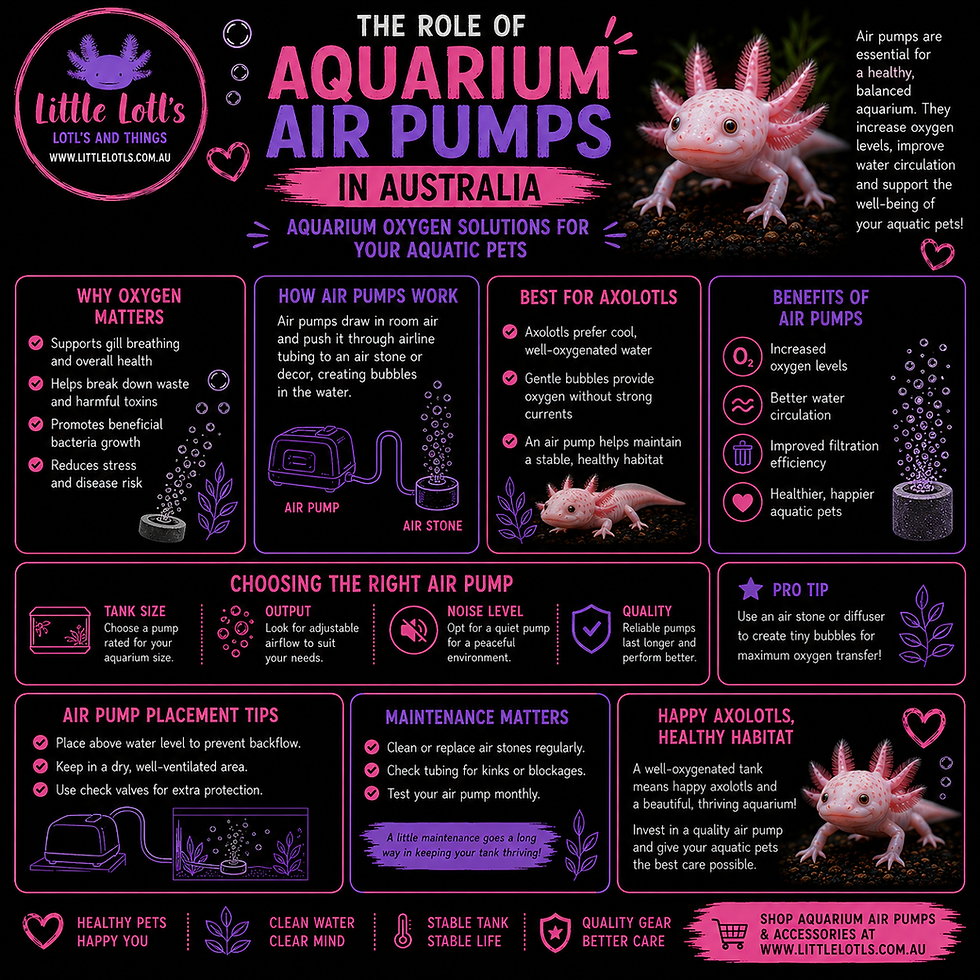
When I first started keeping aquatic pets, I quickly learned that maintaining a healthy environment is key. One of the most important tools in my setup has been the aquarium air pump. These devices play a crucial role in keeping the water oxygenated and ensuring my aquatic friends thrive. In Australia, where the climate can vary widely, having reliable aquarium oxygen solutions is essential for any tank owner, especially those caring for delicate species like axolotls.
Let me walk you through why aquarium air pumps are so important, how they work, and what you should consider when choosing one for your tank.
Why Aquarium Oxygen Solutions Matter
Oxygen is vital for all aquatic life. Fish, amphibians, and invertebrates rely on dissolved oxygen in the water to breathe. Without enough oxygen, your pets can become stressed, sick, or worse. This is where aquarium oxygen solutions come in.
An air pump helps increase oxygen levels by pushing air into the water. This creates bubbles that rise to the surface, promoting gas exchange. The surface agitation allows carbon dioxide to escape and fresh oxygen to enter the water. This process keeps the water healthy and safe for your pets.
In Australia, where temperatures can rise quickly, oxygen levels in water can drop fast. Warmer water holds less oxygen, so using an air pump becomes even more important during hot months. It helps maintain stable oxygen levels, preventing dangerous drops that could harm your aquatic pets.

How Aquarium Air Pumps Work
An aquarium air pump is a simple but effective device. It uses a small motor to push air through a tube into the tank. The air then passes through an air stone or diffuser, which breaks the air into tiny bubbles.
These bubbles do more than just look nice. They increase the surface area where water meets air, speeding up oxygen absorption. The bubbles also help circulate the water, preventing stagnation and distributing heat evenly.
When setting up an air pump, it’s important to match the pump size to your tank. A pump that’s too weak won’t provide enough oxygen, while one that’s too strong can stress your pets by creating too much current.
For example, a 20-litre tank might only need a small pump, while a 100-litre tank will require a more powerful model. Also, consider the type of pets you have. Axolotls, for instance, prefer gentle water movement, so a quieter, low-flow pump is best.
Is a bubbler the same as an air pump?
This is a common question I get asked. The short answer is no, but they are closely related.
An air pump is the device that pushes air into the aquarium. It’s the source of the airflow. A bubbler, on the other hand, is the setup inside the tank that creates bubbles. This usually includes the air stone or diffuser connected to the air pump.
Think of it like this: the air pump is the engine, and the bubbler is the exhaust pipe that releases the air into the water. You need both for the system to work properly.
Some people use the terms interchangeably, but understanding the difference helps when you’re shopping or troubleshooting your setup.

Choosing the Right Aquarium Air Pump in Australia
When selecting an air pump, there are a few key things to keep in mind:
Tank Size - Always check the pump’s capacity. It should be rated for your tank size or slightly larger.
Noise Level - Some pumps can be noisy. Look for quiet models if your aquarium is in a living space.
Power Source - Most pumps run on electricity, but some battery-operated options are available for emergencies.
Durability - Choose a pump made from quality materials that can handle Australia’s climate and power fluctuations.
Adjustability - Pumps with adjustable airflow let you control the bubble size and water movement.
I found that investing in a reliable pump upfront saves a lot of hassle later. It’s also worth checking out local suppliers or online stores specialising in aquarium air pumps Australia to find models suited to our unique conditions.
Maintaining Your Aquarium Air Pump
Keeping your air pump in good shape is simple but important. Here are some tips I follow:
Clean the air stone regularly - Over time, it can clog with algae or debris, reducing airflow.
Check the tubing for cracks or blockages - Replace if needed to maintain good air flow.
Keep the pump dry and elevated - Avoid water spills or splashes that could damage the motor.
Turn off the pump during water changes - This prevents damage and keeps your setup safe.
Regular maintenance ensures your pump runs smoothly and your aquatic pets get the oxygen they need.
Enhancing Your Aquarium Environment with Air Pumps
Beyond oxygenation, air pumps can improve your aquarium in other ways:
Aeration helps beneficial bacteria - These bacteria break down waste and keep the water clean.
Water circulation prevents dead spots - This reduces the risk of harmful bacteria buildup.
Bubbles create a calming visual effect - It adds beauty and interest to your tank.
For axolotl owners, gentle aeration is especially important. Axolotls breathe through gills and skin, so clean, oxygen-rich water supports their health and activity.
If you want to explore more about aquarium air pumps australia, check out trusted local suppliers who understand the needs of specialty aquatic pets. They can help you find the perfect pump for your setup.
Creating a Thriving Home for Your Aquatic Pets
Using an aquarium air pump is one of the easiest ways to improve your tank’s environment. It supports oxygen levels, water quality, and overall pet health. Whether you keep fish, axolotls, or other aquatic creatures, a good air pump is a must-have.
Remember to choose the right size, maintain it well, and adjust airflow to suit your pets’ needs. With the right equipment and care, your aquatic friends will thrive in their home.
I hope this guide helps you understand the role of aquarium air pumps and inspires you to create the best environment possible for your aquatic pets. Happy fishkeeping!


Comments