


Understanding Nitrite: Why It Matters in Your Axolotl Tank

When keeping axolotls, water quality is everything.
Most keepers quickly learn that ammonia is dangerous, but there is another toxic water parameter that deserves just as much attention:
Nitrite.
Nitrite is part of the aquarium nitrogen cycle, and while it is not always as well-known as ammonia, it can still be extremely harmful to axolotls if it is present in the tank.
For axolotls, the safe nitrite reading is always:
Nitrite: 0 ppm
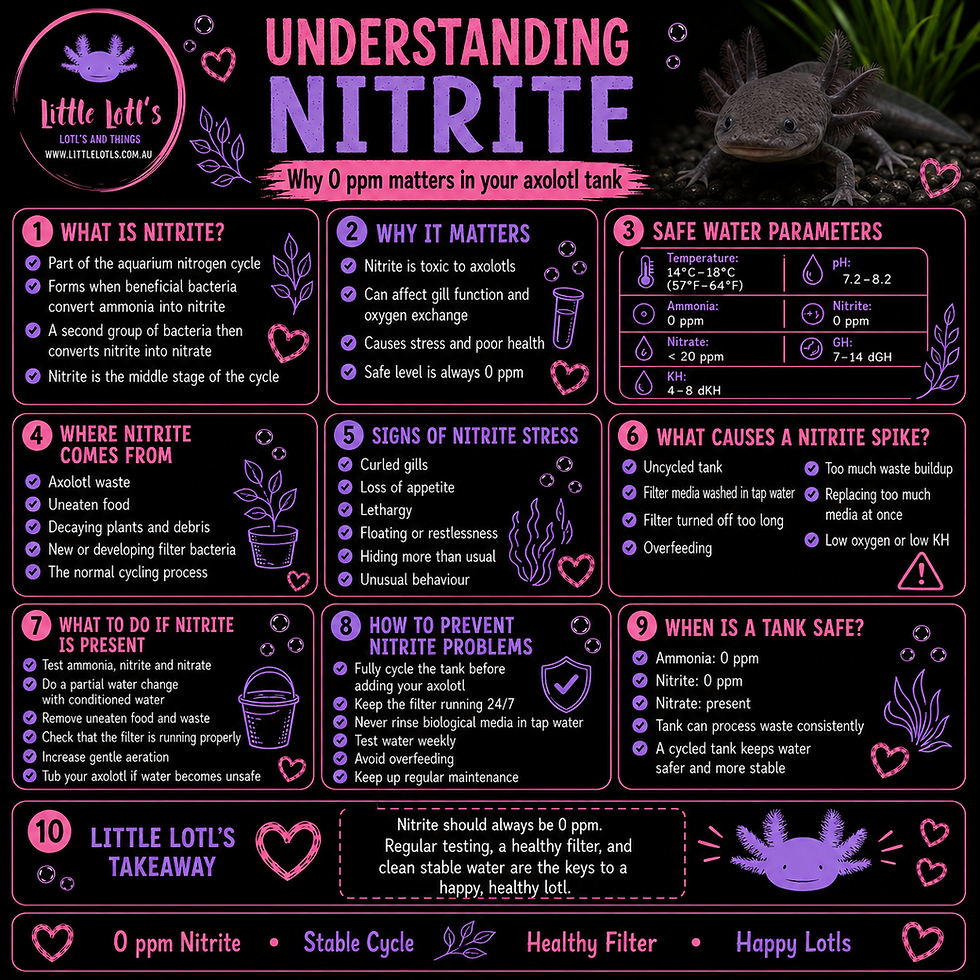
This guide explains what nitrite is, where it comes from, why it matters, how to test for it, and what to do if nitrite appears in your axolotl tank.
What Is Nitrite?
Nitrite is a toxic compound that appears during the aquarium nitrogen cycle.
In a cycled aquarium, beneficial bacteria process waste in stages:
Ammonia is produced from waste, uneaten food, and decaying organic matter.
Beneficial bacteria convert ammonia into nitrite.
A second group of beneficial bacteria converts nitrite into nitrate.
Nitrite is the middle stage of the nitrogen cycle.
It means your tank has started processing ammonia, but the cycle is not finished yet.
Think of nitrite as the awkward middle chapter of cycling. Progress is happening, but the story is not safe to live in yet.
Why Is Nitrite Dangerous for Axolotls?
Nitrite is toxic because it interferes with how aquatic animals use oxygen.
In fish, nitrite is well known for causing oxygen transport problems. Axolotls are amphibians, not fish, but nitrite is still unsafe and stressful for them.
Nitrite exposure can affect:
Gill function
Oxygen exchange
Energy levels
Appetite
Stress response
Overall health
Axolotls absorb substances through their delicate skin and gills, which makes water quality especially important.
Even if the water looks clear, nitrite can still be present.
Clear water is not always safe water.
Little Lotl’s Recommended Nitrite Level
For axolotl aquariums, Little Lotl’s recommends:
Nitrite: 0 ppm
Any nitrite reading above 0 ppm means the tank is not safe and action should be taken.
Little Lotl’s recommended axolotl water parameters are:
Temperature: 14°C to 18°C (57°F to 64°F)
pH: 7.2 to 8.2
Ammonia: 0 ppm
Nitrite: 0 ppm
Nitrate: Less than 20 ppm
GH: 7 to 14 dGH
KH: 4 to 8 dKH
Nitrite should always be tested alongside ammonia and nitrate so you can understand where your tank is in the nitrogen cycle.
Where Does Nitrite Come From?
Nitrite forms when beneficial bacteria begin converting ammonia.
Common sources that lead to nitrite include:
Axolotl waste
Uneaten food
Decaying plants
Dirty substrate
Rotting organic matter
Ammonia being processed during cycling
Filter bacteria developing in a new tank
If you see nitrite, it usually means ammonia-processing bacteria are present, but the bacteria that convert nitrite into nitrate are not yet strong enough.
Nitrite During Tank Cycling
Nitrite commonly appears during cycling.
This is normal in a fishless cycle, but it is not safe for an axolotl.
A typical cycling pattern looks like this:
Ammonia rises.
Nitrite appears.
Ammonia starts dropping.
Nitrite rises.
Nitrate appears.
Ammonia and nitrite both reach 0 ppm.
Nitrate remains present.
A tank is not fully cycled until it can consistently process ammonia and nitrite down to 0 ppm.
If nitrite is present, the tank is still cycling or has experienced a cycle issue.
Signs of Nitrite Stress in Axolotls
Nitrite can cause stress and health problems.
Possible signs include:
Curled gills
Forward-facing gills
Loss of appetite
Lethargy
Floating
Restlessness
Hiding more than usual
Pale or dull gills
Sudden darting
General discomfort
Unusual behaviour
These signs can also occur with ammonia, temperature stress, poor water quality, or illness, so testing is essential.
If your axolotl is acting strangely, always test the water first.
How Do You Test for Nitrite?
Nitrite should be tested with a reliable liquid aquarium test kit.
Liquid tests are usually more accurate than test strips and give a clearer result.
Test nitrite:
During tank cycling
Before adding an axolotl
After a filter issue
After a tank move or upgrade
If your axolotl seems stressed
As part of weekly maintenance
Any time ammonia or nitrate readings seem unusual
A safe result is always:
Nitrite: 0 ppm
If the test shows anything above 0 ppm, treat it as unsafe.
What Causes Nitrite Spikes?
Nitrite spikes happen when the tank produces more nitrite than the beneficial bacteria can process.
Common causes include:
A new or uncycled tank
A stalled cycle
Filter media drying out
Filter media being rinsed in tap water
Replacing too much filter media at once
Overfeeding
Uneaten food left in the tank
Waste buildup
Low oxygen levels
Low KH affecting bacterial growth
A sudden increase in waste load
Nitrite spikes often happen after something disrupts the biological filter.
Your filter media is not just equipment. It is a tiny bacteria suburb, and nobody likes their suburb being washed in chlorine.
What To Do If Nitrite Is Present
If nitrite appears in an axolotl tank, act quickly.
1. Test Ammonia, Nitrite and Nitrate
Testing all three helps show what is happening in the cycle.
Check:
Ammonia
Nitrite
Nitrate
This tells you whether the tank is cycling, stalled, or possibly crashed.
2. Perform a Water Change
Do a partial water change using dechlorinated water matched as closely as possible to the tank temperature.
This helps reduce nitrite levels and make the water safer.
3. Remove Waste and Uneaten Food
Siphon out:
Axolotl waste
Uneaten food
Dead plant matter
Debris
Hidden organic buildup
Less waste means less ammonia and less nitrite being produced.
4. Check the Filter
Make sure the filter is running properly.
Check that:
Water is flowing through the media
Biological media has not dried out
Media has not been rinsed in tap water
The filter has not been turned off for too long
There is enough biological media for the tank
5. Increase Oxygen
Beneficial bacteria need oxygen to process ammonia and nitrite.
Gentle aeration can help support the cycle.
You can use:
Air stones
Sponge filters
Gentle surface movement
Proper filter flow
Avoid strong current, as axolotls prefer calm water.
6. Tub the Axolotl if Needed
If nitrite is present and your axolotl is showing signs of stress, temporary tubbing may be needed.
Use:
Clean food-safe tub
Cool dechlorinated water
Daily 100% water changes
Secure lid with airflow
Quiet, shaded location
Your axolotl is safer in clean, cool tub water than in a tank with toxic nitrite.
Nitrite and Salt
In fishkeeping, chloride is sometimes discussed in relation to nitrite toxicity.
However, axolotls are sensitive amphibians, and salt should not be added casually to an axolotl tank.
Do not use salt as a routine fix for nitrite.
For axolotls, the better response is:
Remove the axolotl from unsafe water if needed
Use clean dechlorinated water
Fix the cycle
Protect the filter bacteria
Test regularly
If you are dealing with a health emergency, seek advice from an experienced exotic vet.
How to Prevent Nitrite Problems
The best way to prevent nitrite problems is to maintain a healthy cycled tank.
To reduce nitrite risk:
Fully cycle the tank before adding your axolotl
Keep the filter running 24/7
Never rinse biological media in tap water
Avoid replacing all filter media at once
Remove uneaten food quickly
Siphon waste regularly
Avoid overfeeding
Test water weekly
Monitor KH during cycling
Keep oxygen levels healthy
Perform regular water changes
A stable cycle is your axolotl’s invisible bodyguard.
Nitrite vs Nitrate: What Is the Difference?
Nitrite and nitrate sound similar, but they are very different.
Nitrite
Nitrite is toxic and should always be:
0 ppm
It is the middle stage of the nitrogen cycle and indicates the tank is not fully safe.
Nitrate
Nitrate is the final stage of the nitrogen cycle and is much less toxic at low levels.
For axolotls, Little Lotl’s recommends:
Nitrate: Less than 20 ppm
Nitrate is controlled through water changes, plants, good maintenance, and avoiding overfeeding.
In simple terms:
Nitrite = unsafe at any detectable level
Nitrate = acceptable only when kept low
Why Nitrite Sometimes Stays High
Sometimes nitrite appears and refuses to drop.
This can happen during cycling when the second group of beneficial bacteria is still developing.
Common reasons nitrite stays high include:
The tank needs more time
Low oxygen levels
Low KH
Very high nitrite levels slowing progress
Not enough biological media
Filter bacteria not fully established
Temperature or water chemistry instability
This stage can be frustrating, but it does not mean the tank is doomed.
It usually means the cycle needs support, stability, and patience.
Can Plants Remove Nitrite?
Live plants can help support water quality, but they should not be relied on to fix nitrite problems.
Plants may use some nitrogen compounds, but they do not replace:
A fully cycled filter
Beneficial bacteria
Water changes
Testing
Proper tank maintenance
Plants are helpful tank roommates, not miracle workers.
Common Nitrite Mistakes to Avoid
Avoid these common mistakes:
Adding an axolotl before the tank is cycled
Ignoring nitrite because ammonia is 0 ppm
Thinking clear water means safe water
Washing filter media under tap water
Replacing all media at once
Turning off the filter overnight
Overfeeding during cycling
Skipping water tests
Waiting too long to act when nitrite appears
Nitrite is not a wait-and-see parameter.
If it is present, respond.
Little Lotl’s Nitrite Checklist
For safe axolotl water:
Test nitrite with a reliable liquid kit
Keep nitrite at 0 ppm
Test ammonia and nitrate as well
Keep the filter running continuously
Protect biological media
Remove waste and uneaten food
Maintain stable KH
Use gentle aeration
Tub your axolotl if the tank becomes unsafe
Keep up regular water changes
Final Thoughts
Nitrite is one of the most important water parameters to understand in axolotl care.
It appears during the nitrogen cycle, but it should never be present in a tank with an axolotl.
The safe reading is always:
Nitrite: 0 ppm
If nitrite appears, it means your tank is still cycling, stalled, or has had a filter bacteria issue.
By testing regularly, protecting your filter media, avoiding overfeeding, and keeping the tank stable, you can prevent nitrite problems and maintain a safer environment for your axolotl.
Clean water, stable bacteria, and regular testing are the keys to a healthy, happy lotl.


Comments