


Did You Know You May Need to Worm Your Axolotl?

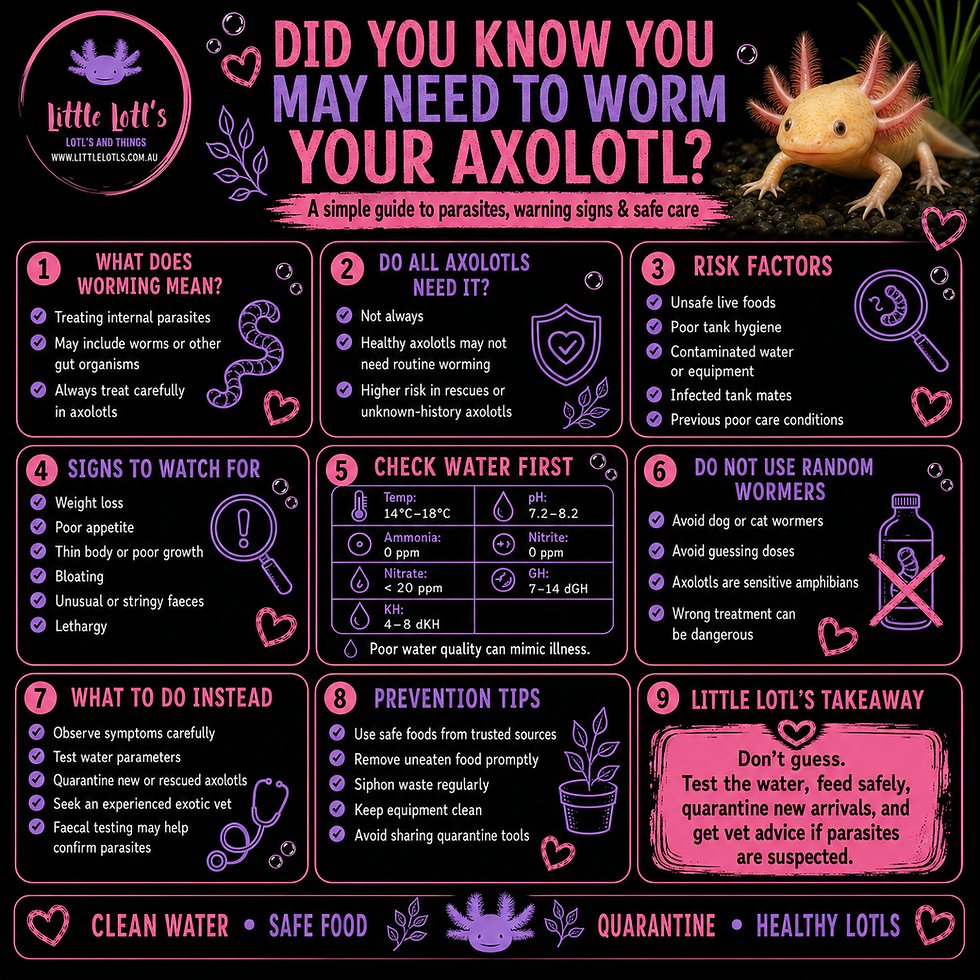
When people think about worming pets, they usually think of dogs, cats, rabbits, or livestock.
But axolotls can also be affected by internal parasites.
While not every axolotl needs routine worming, parasite problems can happen, especially in rescued axolotls, poorly kept axolotls, or axolotls that have been exposed to unsafe live foods.
Because axolotls are delicate aquatic amphibians, worming should always be done carefully and ideally with guidance from an experienced exotic vet.
This guide explains what worming means, why parasites matter, signs to watch for, and how to reduce the risk of parasite problems in axolotls.
What Does “Worming” an Axolotl Mean?
Worming, also called deworming, means treating an animal for internal parasites such as worms or other organisms that may live inside the digestive system.
In axolotls, parasite concerns may include internal worms, protozoa, or other microscopic organisms that affect digestion, appetite, growth, and general condition.
Unlike dogs or cats, axolotls should not be casually wormed with random over-the-counter pet products.
They are amphibians with sensitive skin, gills, and internal systems.
The wrong treatment, wrong dose, or wrong product can be dangerous.
Do All Axolotls Need Routine Worming?
Not necessarily.
A healthy axolotl from a trusted source, kept in clean water, fed safe foods, and showing no symptoms may not need routine worming.
However, worming may be worth discussing with an exotic vet if your axolotl:
Is a rescue
Came from poor water conditions
Was kept with unsafe tank mates
Has eaten risky live foods
Is losing weight despite eating
Has a swollen or abnormal belly
Has ongoing poor appetite
Has unusual faeces
Is failing to grow properly
Looks thin or unwell with no clear water quality issue
The key message is this:
Do not worm blindly.
Test, observe, and seek proper advice when needed.
How Do Axolotls Get Internal Parasites?
Axolotls may be exposed to parasites through:
Unsafe live foods
Wild-caught feeder fish
Contaminated water
Poor tank hygiene
Shared equipment
Infected tank mates
Plants or décor from unsafe sources
Previous poor care conditions
Live foods can be excellent when sourced safely, but risky foods can introduce unwanted organisms.
This is why food source matters.
A worm from a trusted, clean culture is very different from something collected randomly outside.
Signs Your Axolotl May Have Worms or Parasites
Internal parasites can be difficult to confirm just by looking.
Possible warning signs include:
Weight loss
Thin body despite eating
Poor growth in juveniles
Loss of appetite
Intermittent appetite
Unusual faeces
Stringy or abnormal waste
Bloated belly
Lethargy
Pale or poor gill condition
General decline
Failure to improve despite good water quality
These signs can also be caused by other problems, including poor water quality, stress, temperature issues, bacterial illness, impaction, or inappropriate diet.
That is why testing water and seeking veterinary advice is important.
Always Check Water Quality First
Before assuming parasites, always test the water.
Poor water quality is one of the most common reasons axolotls become unwell.
Little Lotl’s recommended axolotl water parameters are:
Temperature: 14°C to 18°C (57°F to 64°F)
pH: 7.2 to 8.2
Ammonia: 0 ppm
Nitrite: 0 ppm
Nitrate: Less than 20 ppm
GH: 7 to 14 dGH
KH: 4 to 8 dKH
If ammonia or nitrite is present, the tank is unsafe.
If water quality is poor, fix that first before assuming worms are the problem.
Water testing is the detective hat. Guesswork is just a soggy magnifying glass.
Why You Should Not Use Random Worming Products
Axolotls are not mammals.
They are not fish.
They are amphibians with delicate gills and permeable skin.
Many medications that are safe for other pets may not be safe for axolotls.
Avoid using:
Dog wormers
Cat wormers
Livestock wormers
Random aquarium medications
Internet dosage guesses
Salt treatments as a routine parasite fix
Products not confirmed safe for axolotls
Even products used in amphibians need correct diagnosis, correct dosing, and correct handling.
When in doubt, speak to an experienced exotic vet.
How Are Parasites Diagnosed?
The best way to investigate internal parasites is usually through veterinary advice.
An exotic vet may recommend:
A faecal test
Microscopic examination
Health assessment
Weight and body condition review
Discussion of diet and history
Water quality review
Appropriate treatment if needed
A fecal test can help identify whether parasites are present and what type may be involved.
This matters because different parasite problems may need different approaches.
When Worming May Be Considered
Worming may be considered when there is a reasonable concern that parasites are present.
This may include:
Rescued axolotls with unknown history
Axolotls exposed to unsafe feeder fish
Axolotls from poor conditions
Ongoing weight loss
Persistent poor appetite
Abnormal faeces
Failure to thrive
Vet-confirmed parasite infection
The safest approach is not “worm every axolotl just because.”
The safest approach is risk assessment, testing where possible, and careful treatment when appropriate.
Quarantine New or Rescued Axolotls
Quarantine is one of the best ways to protect your existing animals.
New or rescued axolotls should be kept separately before being introduced to any shared systems.
During quarantine:
Keep the axolotl in clean, cool, conditioned water
Monitor appetite and behaviour
Watch faeces and body condition
Test water regularly
Do not share nets, tubs, hides, or tools
Wash hands and equipment carefully
Seek vet advice if symptoms appear
Quarantine gives you time to spot problems before they spread.
It is the boring safety fence that saves everyone later.
Safe Feeding Helps Reduce Parasite Risk
Food safety is a big part of parasite prevention.
Safer food options include:
Earthworms from trusted sources
Quality axolotl pellets
Properly sourced blackworms
Frozen foods from reputable suppliers
Cultured live foods from clean setups
Be cautious with:
Wild-caught insects or worms
Wild-caught fish
Feeder fish from unknown sources
Live foods from dirty systems
Shared food cultures with poor hygiene
Feeder fish are especially risky because they may carry parasites, disease, or cause injury.
Axolotls do not need feeder fish to thrive.
Tank Hygiene Matters
Good hygiene helps reduce parasite and disease risk.
Helpful habits include:
Remove uneaten food promptly
Siphon waste regularly
Keep water parameters stable
Avoid overcrowding
Clean tools between tanks
Do not share quarantine equipment
Maintain filtration
Perform regular water changes
Remove dead plants or organic debris
Clean water will not prevent every possible parasite, but it gives your axolotl a stronger foundation for health.
What If You See Tiny Worms in the Tank?
Not every worm in the tank means your axolotl has internal parasites.
Tiny white worms seen in the aquarium may be detritus worms or other small organisms that thrive when there is excess waste.
They are often a sign of:
Overfeeding
Uneaten food
Dirty substrate
Organic buildup
Poor maintenance
If you see worms in the tank, do not immediately medicate the axolotl.
First:
Test the water
Remove waste
Reduce overfeeding
Siphon substrate
Improve maintenance
Identify what you are seeing if possible
Internal parasites are different from small organisms living in the tank environment.
When to Contact an Exotic Vet
Contact an experienced exotic vet if your axolotl shows:
Weight loss
Ongoing refusal to eat
Extreme thinness
Bloating
Abnormal faeces
Weakness
Rapid decline
Persistent floating
Red or irritated skin
Severe lethargy
No improvement despite good water quality
If parasites are suspected, professional diagnosis and treatment are the safest path.
Little Lotl’s Parasite Prevention Checklist
To reduce parasite risk:
Quarantine new or rescued axolotls
Feed safe foods from trusted sources
Avoid wild-caught feeder animals
Avoid unsafe feeder fish
Maintain excellent water quality
Remove uneaten food quickly
Siphon waste regularly
Do not share quarantine equipment
Watch body condition and faeces
Seek exotic vet advice if symptoms appear
Final Thoughts
Axolotls can be affected by internal parasites, but they should not be casually wormed without a reason or proper guidance.
If your axolotl is healthy, eating well, maintaining weight, growing normally, and living in clean stable water, routine worming may not be necessary.
If your axolotl is a rescue, has an unknown history, has been exposed to unsafe foods, or shows signs such as weight loss, poor appetite, bloating, or unusual faeces, parasite testing and vet-guided treatment may be needed.
The safest approach is simple:
Do not guess.
Test the water.
Observe carefully.
Quarantine new arrivals.
Use safe foods.
Speak to an exotic vet when needed.
A healthy axolotl starts with clean water, safe feeding, and smart care.


Comments