


Weekly Axolotl Care Plan: A Simple Routine for a Healthy, Happy Axolotl

Weekly Axolotl Care Plan: A Simple Routine for a Healthy, Happy Axolotl
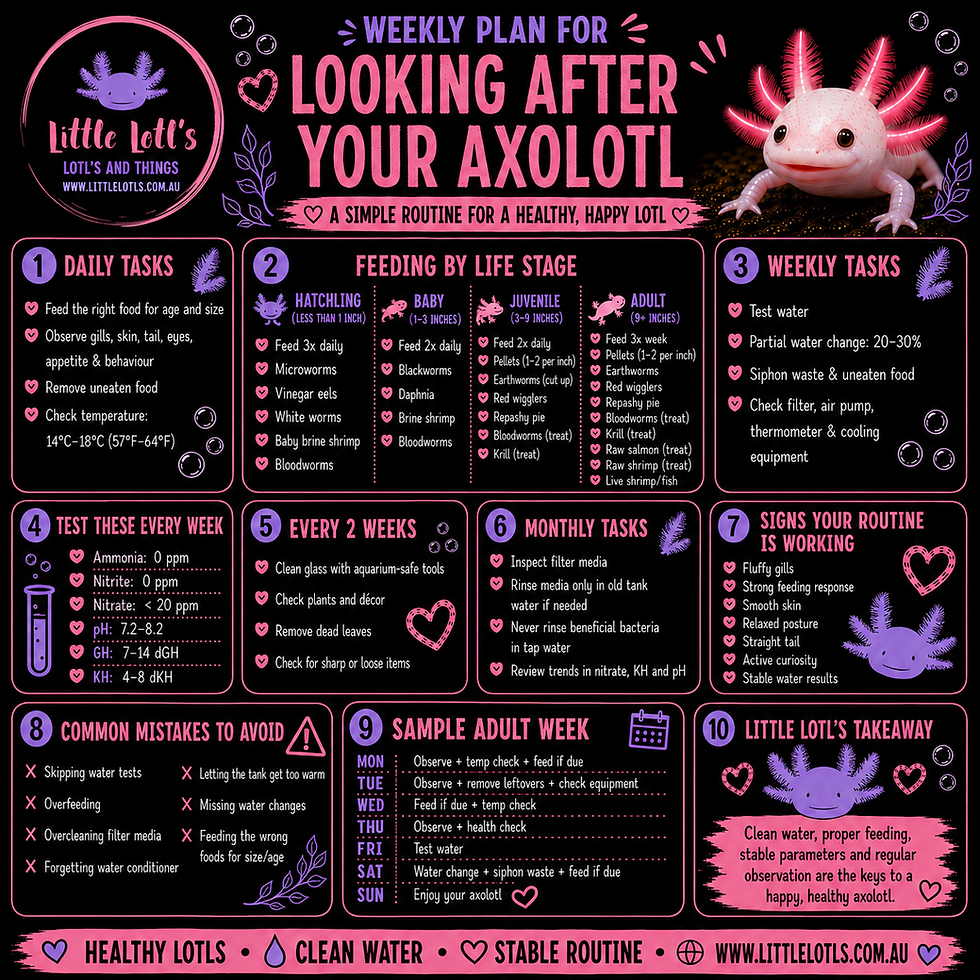
Looking after an axolotl does not have to be complicated. Most healthy axolotls thrive when their owners follow a simple routine that keeps water quality stable, feeding consistent, and potential problems caught early.
Whether you are a first-time axolotl owner or a long-time lotl lover, this weekly care plan will help you keep your axolotl healthy, active, and thriving.
Why a Weekly Care Routine Matters
Axolotls rely entirely on their environment for their wellbeing. Unlike dogs or cats, they cannot leave a dirty tank or tell you when something is wrong.
A regular maintenance schedule helps:
Maintain excellent water quality
Prevent ammonia and nitrite spikes
Detect health issues early
Keep equipment functioning properly
Reduce stress for your axolotl
Create a stable, healthy habitat
The good news is that most tasks only take a few minutes each week.
Daily Axolotl Care Tasks
Feed Your Axolotl
Feeding depends on your axolotl’s age and size. One of the most important parts of a healthy weekly routine is making sure you are feeding the right foods at the right stage of life.
Hatchlings
Size: Less than 1 inch Feed: 3 times a day
Suitable foods include:
Live microworms
Live vinegar eels
Live white worms
Live baby brine shrimp
Bloodworms
Baby Axolotls
Size: 1 to 3 inches Feed: 2 times a day
Suitable foods include:
Live blackworms
Live daphnia
Live brine shrimp
Bloodworms
Juvenile Axolotls
Size: 3 to 9 inches Feed: 2 times a day
Suitable foods include:
Pellets (about 1 to 2 per inch)
Earthworms, cut up
Red wigglers
Repashy pie
Bloodworms as a treat
Krill as a treat
Adult Axolotls
Size: 9 inches and over Feed: 3 times a week
Suitable foods include:
Pellets (about 1 to 2 per inch)
Earthworms
Red wigglers
Repashy pie
Bloodworms as a treat
Krill as a treat
Raw salmon as a treat
Raw shrimp as a treat
Live shrimp or fish when appropriate
Always remove uneaten food after feeding to prevent water quality issues.
Observe Your Axolotl
Spend a few minutes simply watching your axolotl each day.
Look for:
Fluffy gills
Good appetite
Smooth skin
Straight tail
Normal swimming behaviour
Bright, clear eyes
Daily observation is one of the best ways to spot problems before they become serious.
Check Water Temperature
Axolotls thrive in cool water.
Little Lotl’s recommended temperature range:
Temperature: 14°C to 18°C (57°F to 64°F)
Temperatures above 20°C can cause stress and increase the risk of illness.
Weekly Axolotl Care Tasks
Test Your Water
Every week, test:
Ammonia: 0 ppm
Nitrite: 0 ppm
Nitrate: Less than 20 ppm
pH: 7.2 to 8.2
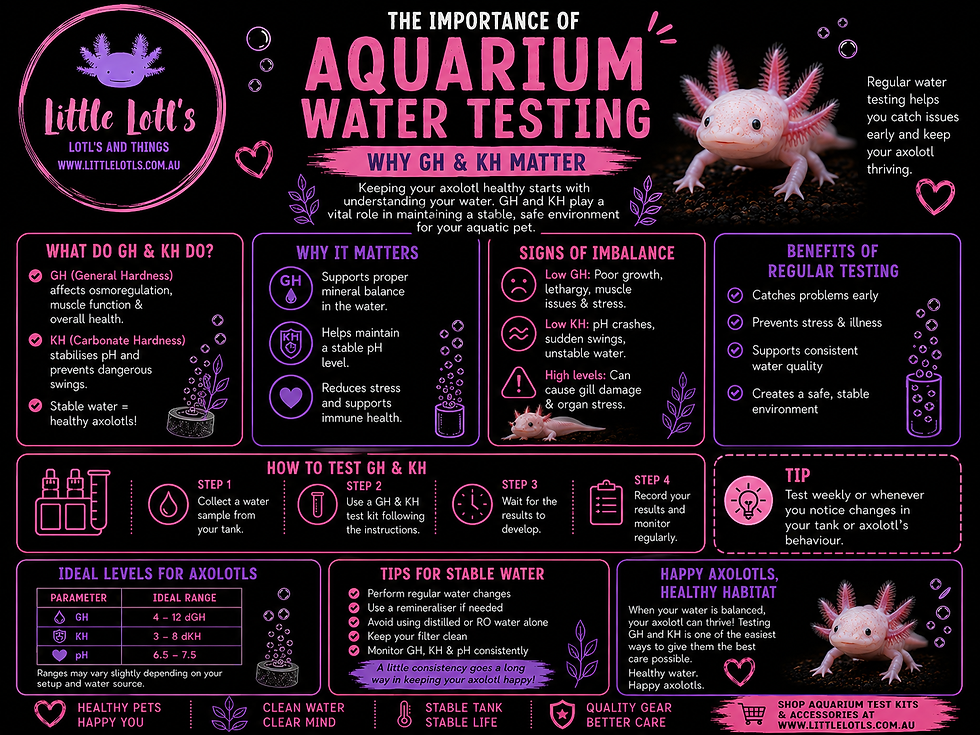
GH: 7 to 14 dGH
KH: 4 to 8 dKH
Water testing allows you to identify issues long before they affect your axolotl.
A quality liquid test kit provides the most reliable results.
Perform a Partial Water Change
Most established axolotl aquariums benefit from a weekly water change.
Generally:
Remove 20 to 30 percent of tank water
Replace with conditioned water
Match water temperature as closely as possible
Never replace all the water at once unless dealing with an emergency.
Gravel Vacuum or Siphon Waste
Axolotls are messy eaters.
Use a siphon to remove:
Uneaten food
Waste
Organic debris
Regular cleaning prevents ammonia buildup and helps maintain stable water quality.
Check Equipment
Inspect:
Filter operation
Air pumps
Air stones
Thermometers
Chillers or cooling fans
Catching equipment problems early can prevent major issues later.
Every Two Weeks
Clean Glass
Use an aquarium-safe sponge or algae scraper to remove algae and biofilm from the tank walls.
Avoid household cleaning products.
Even tiny traces of chemicals can be harmful to axolotls.
Inspect Decorations and Plants
Check for:
Sharp edges
Damaged hides
Dead plant leaves
Loose decorations
Remove anything that could potentially injure your axolotl.
Monthly Axolotl Care Tasks
Check Filter Media
Beneficial bacteria live inside your filter.
Inspect filter media monthly and gently rinse it only in old tank water if required.
Never rinse biological media under tap water.
Chlorine can kill beneficial bacteria and disrupt your nitrogen cycle.
Review Water Parameters
Look for trends over time.
If nitrate is gradually increasing or KH is decreasing, adjustments may be needed before problems develop.
Signs Your Weekly Routine Is Working
Healthy axolotls typically display:
Fluffy, well-developed gills
Strong feeding response
Smooth skin
Relaxed posture
Straight tail
Active curiosity
Consistent growth in juveniles
Stable water test results
These are all signs that your aquarium maintenance routine is supporting a healthy environment.
Common Mistakes to Avoid
Many new keepers accidentally create problems by:
Skipping water testing
Overfeeding
Overcleaning filter media
Forgetting water conditioner
Allowing temperatures to rise too high
Missing regular water changes
Feeding foods that are not suitable for the axolotl’s size and age
Consistency is far more important than perfection.
Small weekly tasks prevent large problems later.
Sample Weekly Axolotl Care Schedule
Because feeding changes depending on age, your weekly routine should match your axolotl’s stage of life.
Adult Axolotl Example Schedule
Monday
Observe axolotl
Check temperature
Feed if scheduled
Tuesday
Observe behaviour
Remove any leftover food
Check equipment
Wednesday
Feed if scheduled
Check temperature
Thursday
Observe axolotl
Quick visual health check
Friday
Test water parameters
Saturday
Partial water change
Siphon waste
Feed if scheduled
Clean glass if needed
Sunday
Relax and enjoy watching your axolotl
Juvenile Axolotl Routine
Juveniles usually need feeding twice daily, so their routine includes:
Morning feed
Evening feed
Daily observation
Daily temperature check
Weekly water testing and water changes
Baby Axolotl Routine
Baby axolotls also need twice-daily feeding, along with careful monitoring of food intake and waste.
Hatchling Routine
Hatchlings need the most attention and usually require three feeds per day, plus frequent observation to make sure they are eating properly.
Feeding by Life Stage at a Glance
Hatchling
Less than 1 inch
Feed 3 times daily
Microworms, vinegar eels, white worms, baby brine shrimp, bloodworms
Baby
1 to 3 inches
Feed 2 times daily
Blackworms, daphnia, brine shrimp, bloodworms
Juvenile
3 to 9 inches
Feed 2 times daily
Pellets, cut earthworms, red wigglers, Repashy pie, bloodworms and krill as treats
Adult
9 inches and over
Feed 3 times weekly
Pellets, earthworms, red wigglers, Repashy pie, bloodworms and krill as treats, plus occasional raw salmon, raw shrimp, or suitable live shrimp/fish
Final Thoughts
A healthy axolotl aquarium is built on consistency.
Just a few minutes each day and a simple weekly maintenance routine can keep your axolotl thriving for years to come.
Remember, successful axolotl keeping is not about doing complicated things. It is about doing the simple things regularly.
Clean water, proper feeding, stable water parameters, and regular observation are the foundations of a happy, healthy lotl.

Comments