


How to Maintain Axolotl Water Quality in Australia

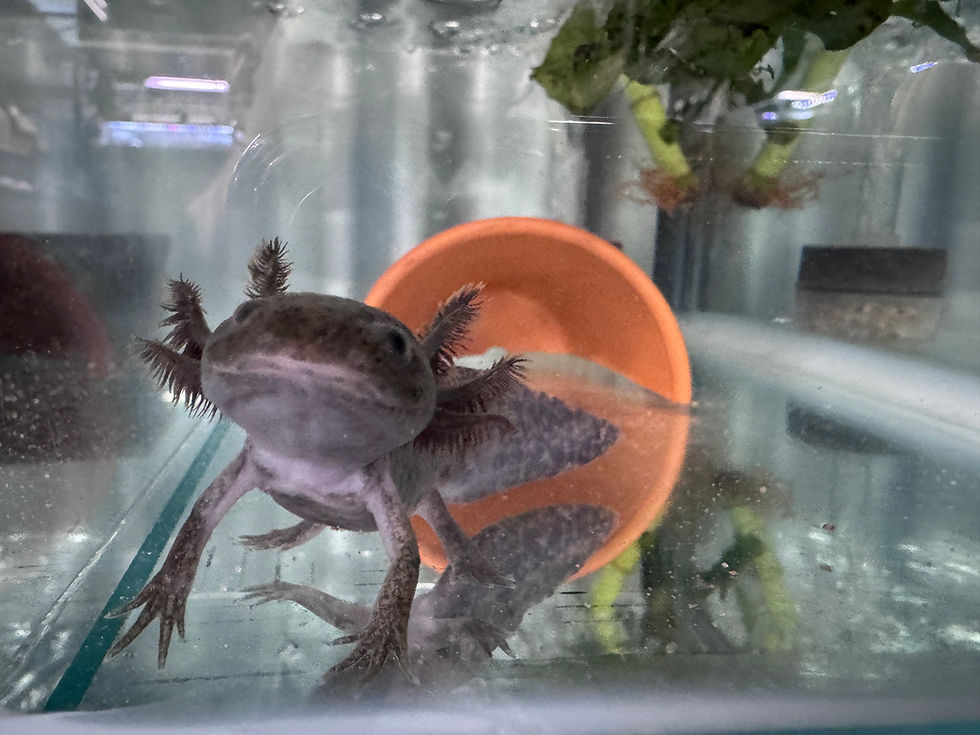
Keeping your axolotl’s water clean isn’t just about clarity — it’s about chemistry. Axolotls are sensitive amphibians that rely on stable, cool, and toxin‑free water to thrive. Here’s how to maintain perfect conditions year‑round.
1. Test Regularly
Use a liquid test kit to check ammonia, nitrite, nitrate, pH, GH, and KH weekly. Ideal ranges:
Ammonia = 0 ppm
Nitrite = 0 ppm
Nitrate < 20 ppm
pH ≈ 7.6
GH ≈ 7-14 dgh
KH ≈ 4-8 dkh
2. Perform Routine Water Changes
Replace 20–30 % of tank water weekly using dechlorinated tap water. This removes waste and replenishes minerals. Always match the temperature to your tank — axolotls prefer 16–18 °C.
3. Use Axolotl‑Safe Conditioners
Avoid fish‑only chemicals. Instead, use:
Chlorine Eliminator to neutralise chlorine and chloramine
KH Buffer to stabilise pH
GH Salts to support gill and bone health
Cycle‑Right and Bacta‑Boost to maintain beneficial bacteria
4. Control Temperature
Warm Australian summers can stress axolotls. Keep tanks in a cool room, use fans or chillers, and avoid direct sunlight. If water exceeds 20 °C, cool gradually — never with ice cubes.
5. Clean Filters and Substrate
Rinse filter media in tank water (not tap water) to preserve bacteria. Vacuum sand or bare‑bottom tanks as required to remove waste without disturbing your axolotl.
6. Watch for Warning Signs
Cloudy water, floating debris, or a strong odour signal imbalance. Test immediately and perform partial water changes. If your axolotl shows curled gills or reduced appetite, check ammonia and temperature first.
7. Keep It Consistent
Axolotls thrive on stability. Sudden changes in water chemistry can cause stress or illness. Log your test results and maintenance schedule to track trends over time.
Little Lotl’s Tip: Always use axolotl‑specific products — they’re formulated for amphibian safety, not fish tolerance.
Need help choosing the right water treatments? Visit www.littlelotls.com.au or contact Support@LittleLotls.com.au for personalised advice.


Comments