


How to Safely Tub Your Axolotl Using Methylene Blue

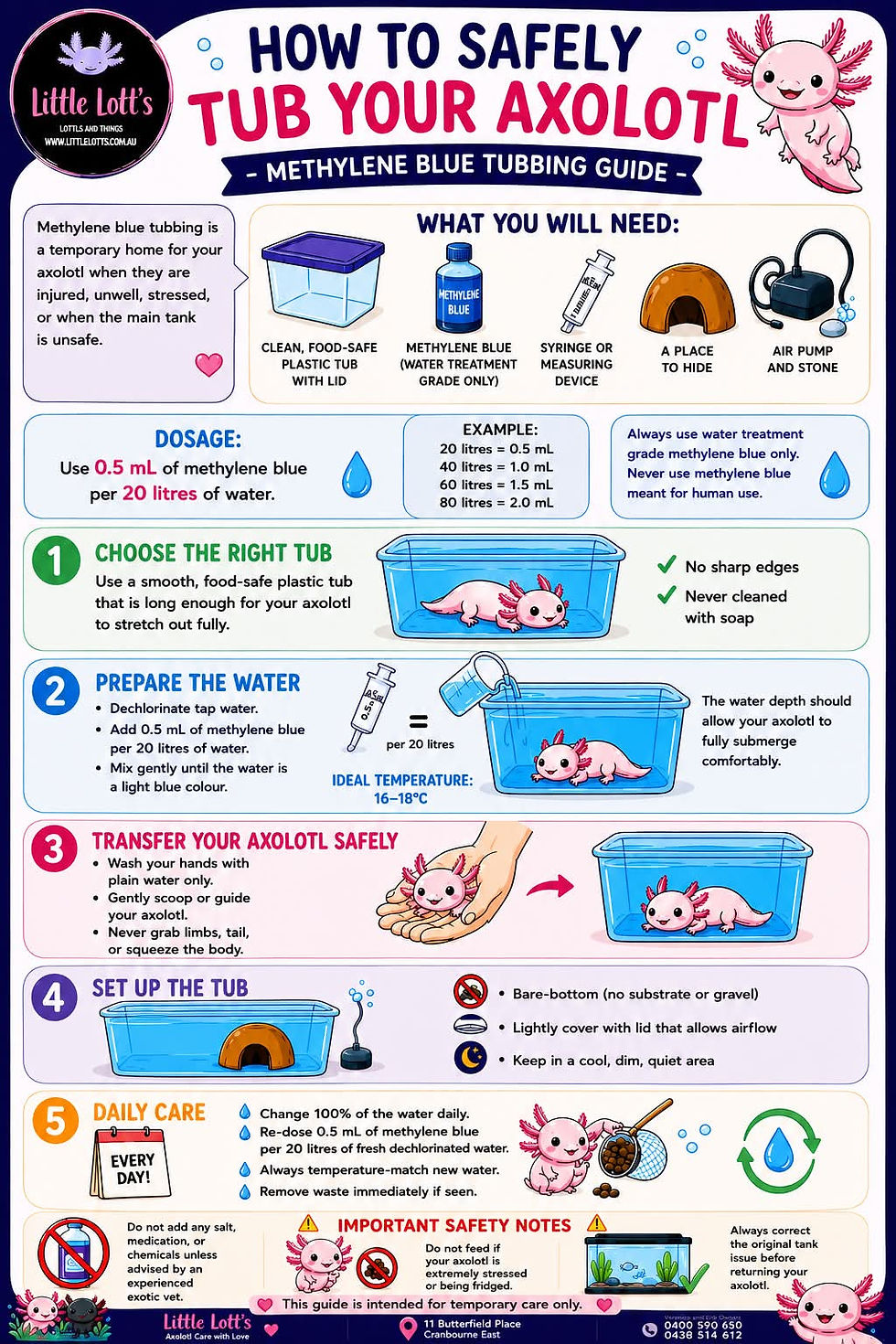
When your axolotl is sick, stressed, injured, or their tank conditions become unsafe, tubbing can be one of the safest temporary care solutions. Adding methylene blue correctly can also help support recovery during fungal issues, minor injuries, and stressful situations.
At Little Lotl’s, we know axolotl emergencies can feel overwhelming, especially for new owners. That’s why we created this simple guide to help you safely set up a methylene blue tub for your axolotl.
What Is Methylene Blue Tubbing?
Methylene blue tubbing is a temporary isolation setup using clean, treated water and a small amount of water-treatment-grade methylene blue.
It can help when:
Your axolotl is stressed or lethargic
Water quality crashes
Your tank is cycling
Your axolotl has minor fungal issues
Injuries need monitoring
You need a clean temporary environment
Think of it as a temporary recovery space for your axolotl.
What You’ll Need
Before setting up your tub, gather the following:
Clean food-safe plastic tub with lid
Water-treatment-grade methylene blue
Syringe or measuring device
Air pump and air stone
A safe hide
Fresh dechlorinated water
Never use methylene blue intended for human use. Only use aquarium-safe water treatment products.
Correct Methylene Blue Dosage
The recommended dosage is:
0.5 mL per 20 litres of water.
Quick Dosage Guide
Water Volume | Methylene Blue |
20L | 0.5mL |
40L | 1.0mL |
60L | 1.5mL |
80L | 2.0mL |
The water should appear a light blue colour, not dark navy blue.
Step 1: Choose the Right Tub
Your tub should:
Be smooth and food-safe
Be large enough for your axolotl to stretch out fully
Never have been cleaned with soap
Have no sharp edges
Bare-bottom tubs are safest. Avoid gravel or substrate during recovery.
Step 2: Prepare the Water
Fill the tub with cool dechlorinated water
Add methylene blue using the correct dosage
Mix gently until evenly dispersed
Add an air stone for oxygenation if possible
Ideal temperature range:
16°C−18°C16\degree\text{C} - 18\degree\text{C}16°C−18°C
Axolotls prefer cool, stable temperatures. Warm water can increase stress and worsen illness.
Step 3: Transfer Your Axolotl Safely
When moving your axolotl:
Wash hands with plain water only
Gently guide or scoop your axolotl
Never grab limbs or squeeze the body
Minimise stress and handling time
A calm transfer helps prevent additional stress during recovery.
Step 4: Set Up the Recovery Tub
For the best recovery environment:
Keep the tub in a cool, dim, quiet area
Use a loose-fitting lid for airflow
Add a hide for comfort
Avoid bright lights or loud vibrations
Your axolotl may spend a lot of time resting during treatment. This is normal.
Step 5: Daily Care
Daily maintenance is extremely important.
Every day:
Change 100% of the water
Re-dose methylene blue correctly
Temperature-match fresh water
Remove waste immediately
Clean water is one of the biggest factors in successful recovery.
Important Safety Notes
Do not add salt or other medications unless advised by an experienced exotic vet
Never overdose methylene blue
Do not keep axolotls in poor-quality water during treatment
This guide is intended for temporary care only
If your axolotl stops eating, floats uncontrollably, develops severe fungus, or worsens rapidly, contact an experienced exotic veterinarian.
Final Thoughts
Tubbing can feel stressful the first time, but with the right setup, it becomes a safe and effective recovery method for many common axolotl issues.
The goal is simple:
Clean water
Low stress
Stable temperatures
Gentle care
Proper care and a clean recovery environment can make a significant difference during the healing process.
For more axolotl care guides, products, hides, food, and healthy axolotls, visit:Little Lotl’s


Comments