


Methylene Blue for Axolotls: Uses, Dosage and Safe Treatment Guide

Updated: Jul 23

Methylene blue is a useful product to keep in an axolotl first-aid kit, especially when mild external health problems appear unexpectedly.
It may help support axolotls experiencing external fungal growth, certain external parasites, mild bacterial infections, or stress caused by ammonia and nitrite exposure. However, methylene blue must be measured carefully and should never replace good water quality or professional veterinary care.
This guide explains when methylene blue may be helpful, how to use Little Lotl’s Methylene Blue safely and when it is time to contact an exotic pet veterinarian.
What Is Methylene Blue?
Methylene blue is a blue aquarium treatment commonly used as supportive care for certain external health concerns in aquatic animals.
Axolotls have delicate skin and exposed external gills, allowing them to absorb substances directly from the water. For this reason, treatments must always be accurately measured and used at the recommended dose.
Little Lotl’s Methylene Blue may assist with:
Mild external fungal infections
Certain external parasites
Mild external bacterial infections
Support following ammonia exposure
Support following nitrite exposure
Quarantine and hospital-tub care
Methylene blue is not a cure for every illness. It should be used alongside clean, cool water, accurate water testing and careful observation.
Methylene Blue for Mild Fungal Infections
Fungal growth on an axolotl often appears as a white, pale or fluffy patch on the gills, toes, tail or body.
It may resemble a small piece of cotton attached to the skin. Mild external fungal growth may respond to carefully managed supportive treatment with methylene blue.
More serious fungal infections can spread quickly, particularly when an axolotl is already stressed by warm temperatures, injury or poor water quality.
Seek veterinary advice if the fungus:
Continues spreading
Returns repeatedly
Covers a large area
Affects the eyes or mouth
Is accompanied by wounds, swelling or loss of appetite
Methylene Blue for External Parasites
Methylene blue may assist with certain external parasites affecting the skin or gills.
Possible signs of external irritation or parasites may include:
Frequent scratching or rubbing
Sudden darting around the aquarium
Excessive slime production
Irritated skin
Unusual gill movement
Persistent restlessness
These symptoms can also be caused by ammonia, nitrite, chlorine, unsuitable temperatures or other water-quality problems. Test the aquarium water before assuming parasites are responsible.
Parasites can be difficult to identify without professional examination. Seek advice from an exotic pet veterinarian if symptoms continue or the cause is unclear.
Methylene Blue for Mild Bacterial Infections
Methylene blue may provide supportive care for some mild external bacterial infections.
Possible signs of an external bacterial problem may include:
Red or irritated areas
Minor skin lesions
Inflamed tissue
Changes around a small wound
Excessive slime coat
Slow healing
Methylene blue should not be relied upon for deep wounds, ulcers, severe redness, widespread infection or internal illness.
Bacterial infections can worsen rapidly and may require prescription medication from a veterinarian experienced with amphibians.
Methylene Blue After Ammonia or Nitrite Exposure
Ammonia and nitrite are toxic to axolotls and should always test at 0 ppm in a properly cycled aquarium.
Methylene blue may be used as part of supportive care after ammonia or nitrite exposure. However, it does not remove these toxins and cannot repair a damaged nitrogen cycle and should never be used in a tank, a hospital tub is required for treatment.
If ammonia or nitrite is detected:
Move the axolotl into a clean hospital tub containing cool, dechlorinated water.
Test the main aquarium thoroughly.
Check whether the filter and biological cycle are functioning correctly.
Complete appropriate water changes.
Remove waste and uneaten food.
Monitor the axolotl for signs of distress.
Do not return the axolotl to the aquarium until tank cycle is established ammonia and nitrite both remain at 0 ppm.
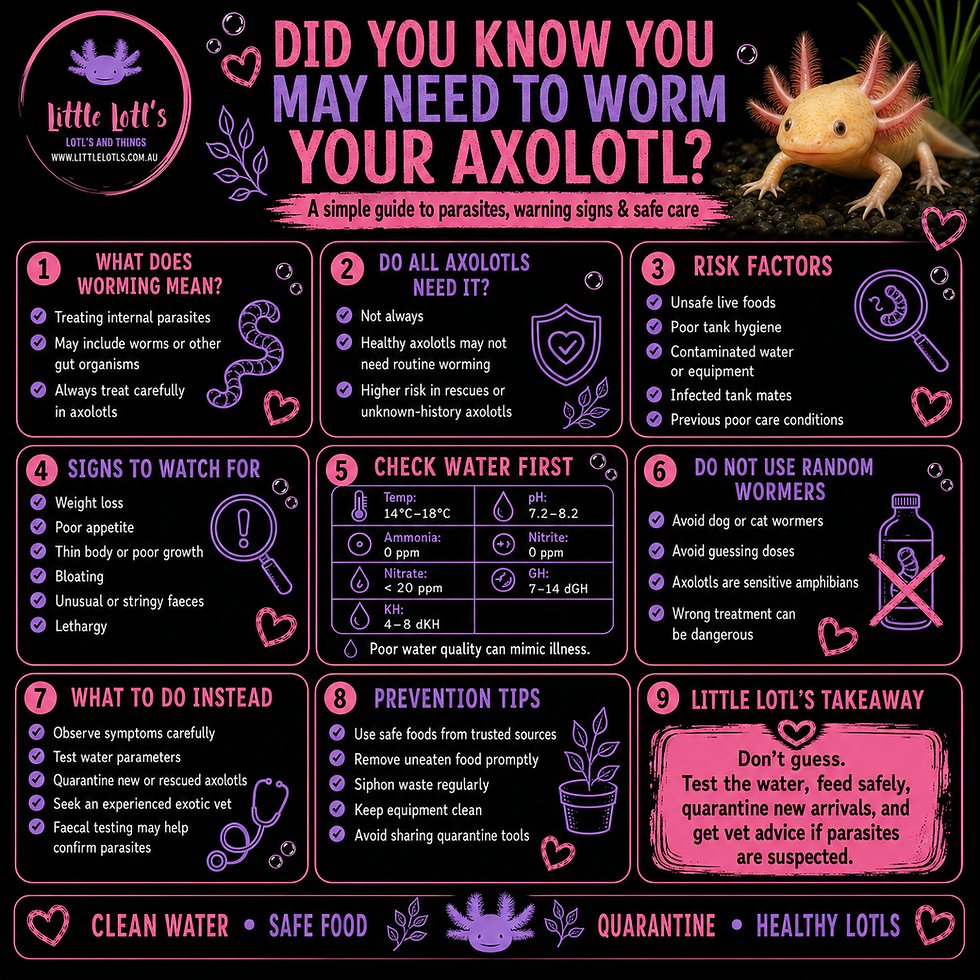
Check the Water Before Treating
Many symptoms that resemble illness are caused or worsened by unsafe aquarium conditions.
Before beginning treatment, check:
Ammonia: 0 ppm
Nitrite: 0 ppm
Nitrate: kept low, preferably below 20 ppm
Temperature: ideally 14–18°C
pH: 7.2ppm-8.2ppm stable and appropriate for axolotls
Chlorine and chloramine: removed with an axolotl-safe water conditioner
Medication cannot compensate for warm water, toxic ammonia, high nitrite or unstable water parameters.
Fixing the underlying cause is just as important as treating the visible symptoms.
Why Use a Separate Hospital Tub?
Methylene blue is usually best used in a separate hospital tub rather than the main aquarium.
A hospital tub allows you to:
Measure the water volume accurately
Control the treatment dose
Observe the axolotl closely
Complete full water changes easily
Protect live plants and aquarium décor
Reduce the risk of disrupting beneficial bacteria
Prevent staining inside the display aquarium
Methylene blue may stain skin, clothing, silicone, tubs, ornaments and porous surfaces. Use gloves and protect nearby benches, towels and flooring.
Little Lotl’s Methylene Blue Dosage
Use:
0.25 mL per 10 litres of water
Measure the water volume and treatment accurately using a small syringe.
Examples:
10 litres: 0.25 mL
20 litres: 0.50 mL
40 litres: 1 mL
Never estimate the dosage by eye.
Adding extra methylene blue will not make the treatment work faster and may place additional stress on the axolotl.
How to Prepare a Methylene Blue Hospital Tub
You will need:
A clean, food-safe tub
Cool, dechlorinated water
A secure ventilated lid
A digital thermometer
A measuring syringe
Little Lotl’s Methylene Blue
A spare tub for daily water changes
A gentle air stone if additional oxygenation is needed
Step 1: Add the Water
Measure the exact amount of water placed into the hospital tub.
Use enough water for the axolotl to remain fully submerged while resting comfortably on the bottom.
Step 2: Dechlorinate the Water
Treat tap water with an axolotl-safe water conditioner.
Ensure the new water is close to the same temperature as the water the axolotl is currently in. Sudden temperature changes may cause unnecessary stress.
Step 3: Add the Correct Dose
Measure 0.25 mL of Little Lotl’s Methylene Blue for every 10 litres of water.
Mix the treatment thoroughly through the water before adding the axolotl.
Never pour concentrated methylene blue directly onto the axolotl, its skin or its gills.
Step 4: Transfer the Axolotl Carefully
Move the axolotl gently using clean hands or a suitable container.
Keep the hospital tub in a quiet, dimly lit area away from direct sunlight, heaters and busy household activity.
Step 5: Monitor Closely
Watch for signs of distress, including:
Frantic swimming
Repeated escape attempts
Severe forward-curled gills
A tightly curled tail tip
Rolling or loss of balance
Sudden unresponsiveness
Rapid worsening of symptoms
Move the axolotl into fresh, dechlorinated water and seek veterinary advice if immediately whilst you start treatment.
Step 6: Complete Daily Water Changes
Hospital tubs do not contain established biological filtration.
Complete a 100% water change every day minimum using fresh, temperature-matched, dechlorinated water.
Prepare the replacement tub with the correctly measured methylene blue dose before transferring the axolotl.
Never reuse dirty treatment water.
Signs the Axolotl May Be Improving
Signs of recovery may include:
Fungal growth becoming smaller
External irritation decreasing
No new patches developing
Improved appetite
More normal movement
Relaxed gills and tail
Improved alertness
Wounds appearing cleaner
Continue monitoring the axolotl and correcting the original cause of the problem, even when visible symptoms begin to improve.
Important Methylene Blue Safety Advice
When using methylene blue for axolotls:
Follow the recommended dose
Do not overdose
Do not pour it directly onto the axolotl
Use a separate hospital tub
Keep the water cool and dechlorinated
Complete daily water changes
Do not mix treatments unless directed by a veterinarian
Keep out of reach of children
Avoid contact with clothing and surfaces
Store in a cool, dry place away from sunlight
Do not use it as a substitute for fixing poor water quality
Avoid combining methylene blue with salt baths, tea baths, antibiotics, antifungal medications or other aquarium treatments unless an experienced veterinarian has advised you to do so.
When to Consult an Exotic Pet Vet
Methylene blue may be helpful for mild external concerns, but some conditions require professional diagnosis and treatment.
Consult an exotic pet veterinarian if:
Symptoms persist
Symptoms become worse
Fungus continues spreading
External parasites are suspected but cannot be identified
A bacterial infection appears severe
The axolotl has deep wounds or ulcers
There is significant redness, bleeding or swelling
The axolotl cannot remain upright
The axolotl repeatedly floats or rolls
The axolotl becomes unresponsive
The axolotl stops eating
There is no clear improvement
You are unsure what is causing the symptoms
Early veterinary treatment can prevent a mild problem from becoming a serious one.
Preventing Future Axolotl Health Problems
Stable aquarium care reduces the likelihood of fungal, bacterial and water-quality problems.
Maintain your axolotl aquarium by:
Keeping it fully cycled
Testing the water regularly
Maintaining ammonia and nitrite at 0 ppm
Keeping nitrate controlled
Keeping the water between approximately 14–18°C
Removing waste and uneaten food promptly
Maintaining the filter correctly
Avoiding sharp or unsafe decorations
Quarantining new animals and plants
Keeping suitable first-aid supplies ready
A prepared first-aid kit may include methylene blue, water conditioner, hospital tubs, measuring syringes, a liquid water-testing kit, a thermometer and the contact details of an exotic pet veterinarian.
Keep Little Lotl’s Methylene Blue Ready
Little Lotl’s Methylene Blue may assist with mild external fungus, certain external parasites, mild bacterial infections and supportive care following ammonia or nitrite exposure.
Always use it at the correct dose, provide clean and cool water, monitor the axolotl closely and correct any underlying aquarium problems.
If symptoms persist, consult your exotic pet veterinarian.
This article contains general aquarium-care information only and is not a substitute for diagnosis or treatment from a qualified exotic pet veterinarian.


Comments